

By Climate Tracker Asia Team
When Lalie Centeno was a child, the weather in her hometown of Laguna puzzled her. Laguna is a province south of Manila in the Philippines, where agriculture remains an important part of life and livelihoods.
Growing up at the foot of Mt. Makiling, Lalie remembers the weather as unpredictable. As a child, she had a more imaginative explanation: “Do these weather shifts make my Mariang Makiling angry?”
Mariang Makiling is a legendary diwata, or nature spirit, associated with Mt. Makiling in Philippine folklore. As Lalie grew older and learned more about biodiversity and climate systems, folklore gave way to bigger questions. She began paying closer attention to the weather she had known all her life and what it meant for the communities around her.
Today, as a Development Communication student, Lalie approaches those questions through pakikipagkuwentuhan, or connecting with people through conversation and shared stories.
For Lalie, storytelling is a bridge between science and people’s everyday lives. Climate change may be complex, but communicating it does not have to be.
Finding her space
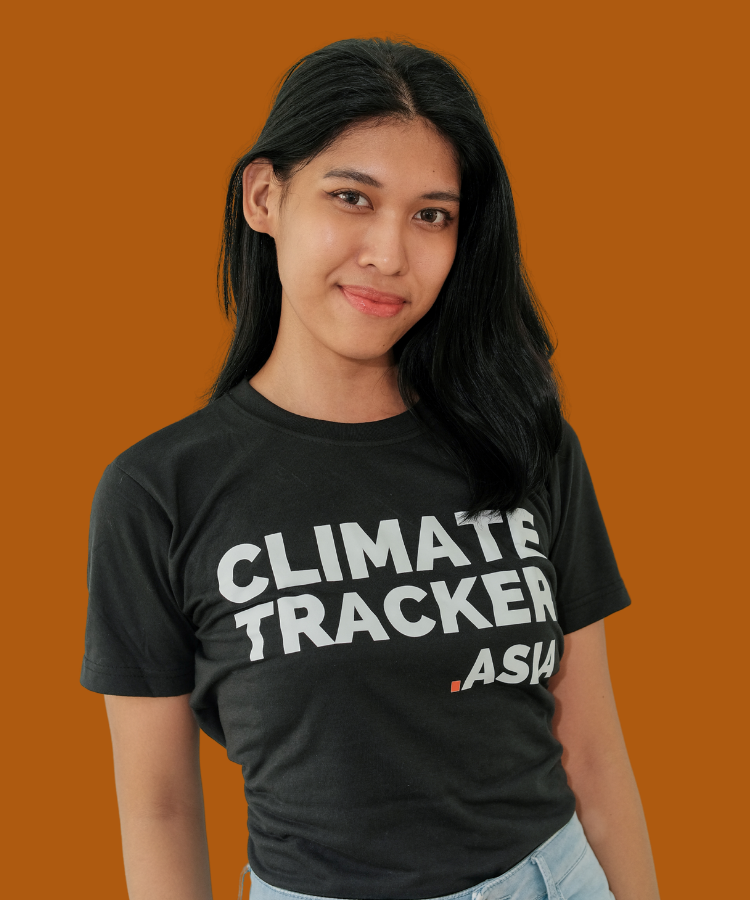 Lalie already had experience working with communities before joining Climate Tracker Asia’s NextGen Climate Bootcamp. What she was still figuring out was where she fit in the climate conversation.
“Climate Tracker Asia helped me find my space in the discourse of climate change,” she says.
That space turned out to be close to the people themselves.
For Lalie, communities living with climate change should be at the center of climate stories. Their experiences do more than make scientific information relatable. The knowledge people build from living and working in a place can also help explain what climate change looks like on the ground.
“Human interest is the soul of a story,” she says. “The more humanized our stories are, the more relatable they are.”
NextGen also challenged an assumption she had carried into the program. Lalie once thought climate communication needed to be “technical and heavily scientific.” She came away believing it could instead be “genuine, grounded, and relatable.”
Following the story home
For her NextGen story, Lalie returned to farmers she already knew in Laguna.
She began exploring why some rice farmers were diversifying into ornamental crops such as asters and other cut flowers. Some farmers told her these crops offered better financial opportunities and could be easier to grow under difficult weather conditions.
But the deeper she looked, the bigger the story became.
What pushes a farmer to change what they grow? What do those decisions reveal about how agricultural communities respond to changing conditions? And if farmers increasingly move away from rice, what could that mean for the crop that has long been central to Filipino diets and livelihoods?
The story brought together the lessons Lalie had been gathering throughout NextGen: climate change rarely exists on its own. It intersects with food, livelihoods, economics and the choices people make every day.
It also brought her back to something she already knew well: listening.
Read more
