

By Climate Tracker Asia Team
Lance Josef Landagan knew there were stories around him. He just did not know where to begin.
As a campus journalist and veterinary medicine student from Nueva Ecija, a largely agricultural province north of Manila in the Philippines, Lance was interested in climate reporting but questioned whether he knew enough to do it.
“There’s so much story to tell in our community,” he says. “It’s just that, I don’t know where to start and I doubt if I am the right person to help share it.”
NextGen gave him a place to start.
Learning step by step
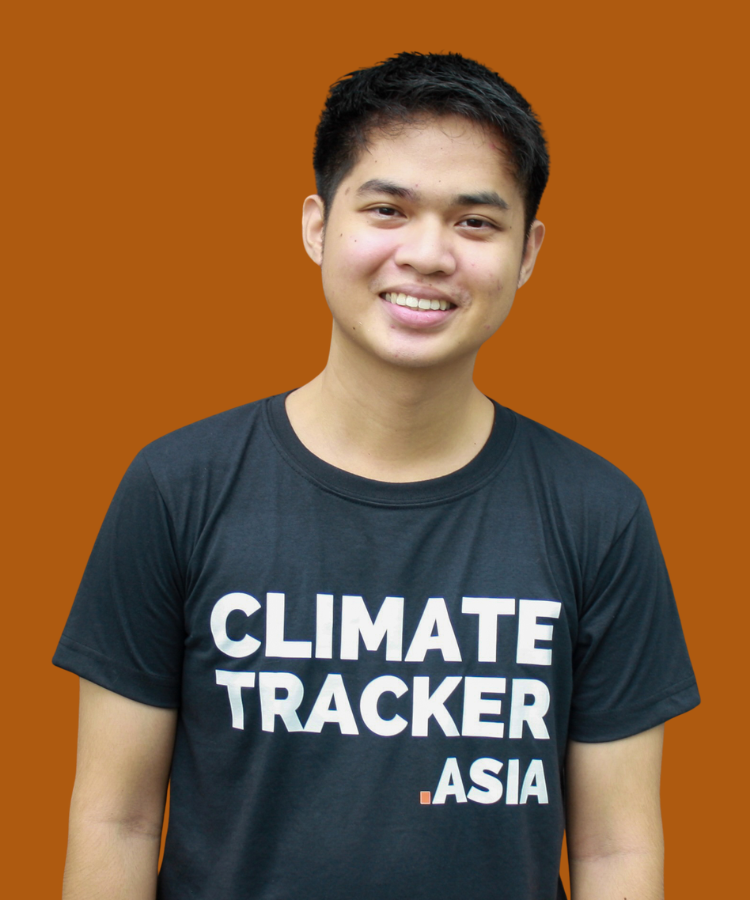 Climate science had once seemed like something Lance needed to master before he could report on it. Working through the fundamentals helped him see how much more there was to question, including ideas about climate science he had learned in school.
But the bigger shift was learning to connect individual events with the systems surrounding them.
Week by week, Lance began looking beyond a flood or a period of extreme heat to ask what made people vulnerable in the first place, and how food, energy, infrastructure and other systems shaped their experience of climate impacts.
The process also made climate reporting feel less intimidating. Listening to mentors talk about stories that took months, interviews that did not make the final cut and the frustrations that come with reporting showed him that uncertainty was part of the work.
His fellow NextGen participants helped too.
“It made the journey feel less lonely,” Lance says.
Finding the story only he could tell
Lance turned toward a subject already at the center of his life: animals.
His NextGen project explores how extreme weather affects animal shelters in the Philippines. Many shelters already operate with limited resources, relying on donations and other ways to keep their facilities running. Heat and strong typhoons add another layer of difficulty, raising questions about the health and welfare of the animals and the people caring for them.
For Lance, being a veterinary student was no longer separate from being a climate storyteller. It was his way into the story.
That realization changed another assumption he had carried into NextGen.
“Before NextGen, I thought that climate stories always have to be big or life-changing,” he says. That made him feel that he was “not enough” to do climate reporting.
“Now I think that everyone has a story to tell that matters.”
He no longer has to wait until he knows everything about climate science, or until he becomes a veterinarian, to begin.
The starting point can be the world he already knows.
Read more
